A Real Estate Led PR Route For HNW Clients Seeking Long Term Residence In Turks And Caicos
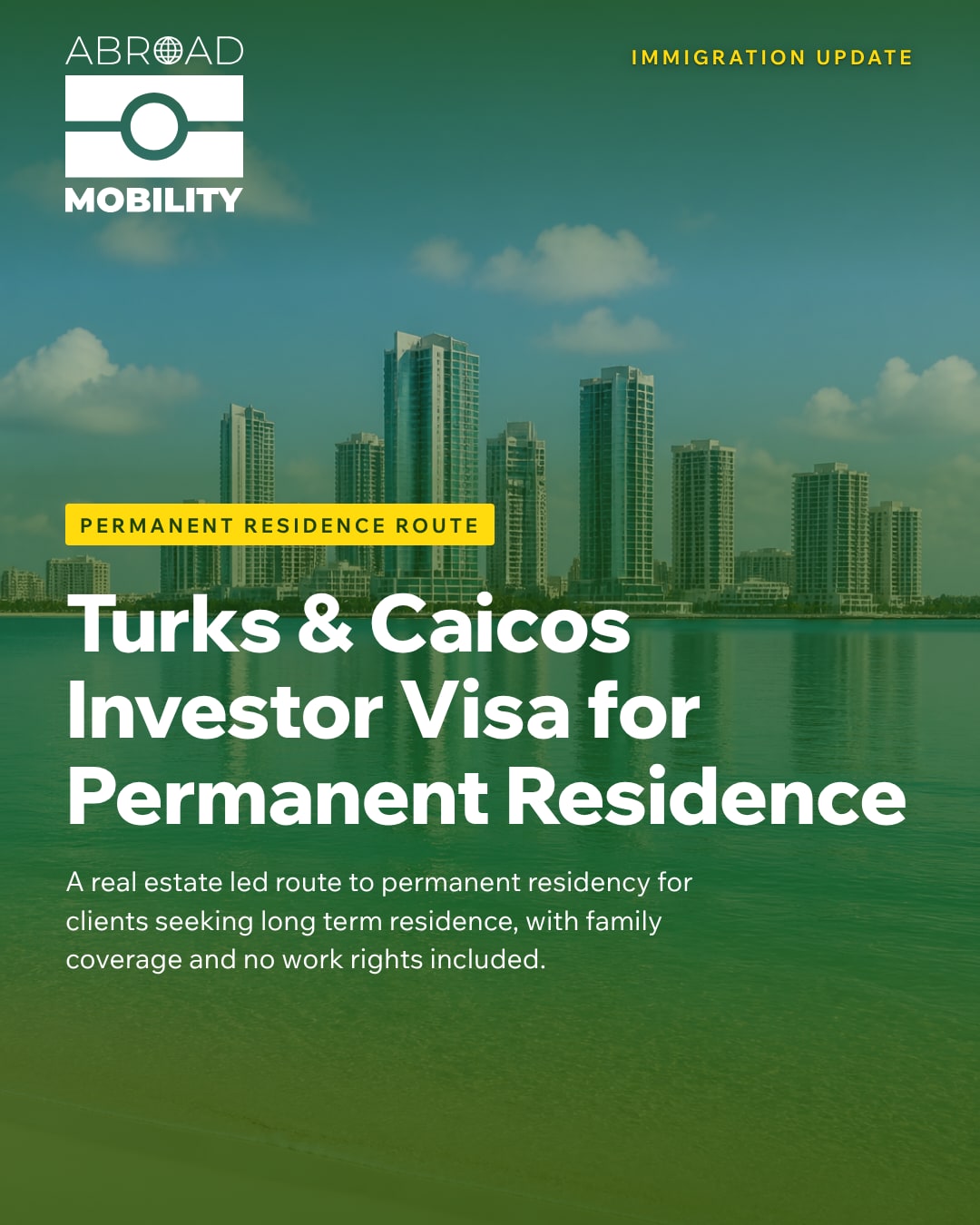
When a client’s priority is long term residence in a stable Caribbean jurisdiction, a permanent residence track can be a better fit than a time limited visa. The Turks & Caicos Investor Visa, also known as the Permanent Residence Certificate for Investors, leads to permanent residency (PR) through substantial investment, most commonly qualifying real estate. In practice, this can suit high net worth founders, globally mobile families and retirees your firm supports, especially where the client values residence rights and a low tax environment, while accepting that the status provides the right to live, but not work, in Turks and Caicos.
Who The Program Fits
This program is designed for high net worth individuals seeking permanent residency in the Turks and Caicos Islands through a substantial capital placement. It is most relevant where your client’s plan centers on establishing a long term home base on the islands, rather than securing immediate work authorization or instant citizenship.
- Real estate led applicants who are comfortable meeting a location dependent minimum property threshold.
- Clients prioritizing long term residence and the right to live in Turks and Caicos, with expectations set that the program does not grant full work rights.
- Family planners who want a single application structure that can cover a spouse and dependent children under 18.
Within Abroad Mobility’s co managed partnership model, many firms start by using the Eligibility Engine to frame an initial fact set, then move into a document and source of funds readiness plan before route configuration.
Eligibility And KYC AML Considerations
The Turks & Caicos Investor Visa requires a qualifying investment and proof of self sufficiency. The most common qualifying route is the purchase of qualifying property, with minimum thresholds that vary by island or zone. The program also contemplates business investment, subject to approval by regulatory authorities.
- Qualifying investment: purchase of qualifying real estate, or an approved business investment.
- Minimum real estate thresholds: between USD $300,000 and USD $1,000,000 depending on the island or zone where the property is located.
- Self sufficiency: proof of self sufficiency is required.
- Education and language: no formal education or language requirements are part of the program framework.
From a practice management perspective, this is a file type where clean capitalization records and consistent narrative for the investment funds matter early. Abroad Mobility positions this as a compliance first engagement, with KYC AML and due diligence readiness built into intake.
Costs
Estimated cost components for the Turks & Caicos Investor Visa include government filing fees, legal support, due diligence, document legalization and the qualifying investment, contribution or capital placement. A typical all in budget is often around USD $300,000, although the final amount can vary with dependants, route configuration and service scope.
| Cost Planning Item | How It Commonly Shows Up In A Case Budget |
|---|---|
| Qualifying investment or capital placement | Real estate purchase meeting the minimum threshold by island or zone, or a business investment approved by regulatory authorities |
| Government and professional components | Government filing fees, legal support, due diligence and document legalization |
For program positioning and intake context within your firm, you can reference the program page directly: Turks & Caicos Investor Visa.
Process And Timeline
The Turks & Caicos Investor Visa leads to permanent residency (PR). A typical timeline to obtain the status is about 4 months, and timelines depend on the authority and the case. Many advisors find it helpful to align the property transaction steps and documentation legalization steps early, so the PR submission package is not delayed by avoidable gaps.
Family And Dependents
Spouse and dependent children under 18 are covered by the main applicant’s certificate and must be declared at the time of application. The one off government fee covers the family unit, which can simplify planning for clients applying as a household rather than as separate principal applicants.
Compliance Notes For Your File Preparation
- Route configuration: confirm early whether the client’s plan is qualifying real estate or an approved business investment, since the evidence set and sequencing can differ.
- Location sensitivity: for real estate, verify the island or zone where the property is located because the minimum threshold depends on location.
- Household disclosure: ensure spouse and dependent children under 18 are declared at the time of application to align with the family coverage rules.
- Self sufficiency evidence: prepare a coherent proof of self sufficiency package that aligns with the client’s overall narrative and holdings.
If your client is still at the stage of comparing routes and decision criteria across jurisdictions, some firms start with the GAMI Mobility Index as a structured discussion tool, then narrow into a program specific assessment.
For firms looking to operationalize international casework without building jurisdiction by jurisdiction capacity, Abroad Mobility’s co management partnership is built for secure intake, documentation coordination and end to end case support while you remain the client facing advisor.
If you have a client profile in mind for Turks and Caicos, Abroad Mobility can support a scoped eligibility and documentation plan under a co managed partner workflow. Request program details or a case specific estimate here: program contact form. Information is general, requirements and timelines can change, and this is not legal advice.