How To Discuss EU Pressure, Schengen Visa Risk, And The Documents To Watch Next
Client conversations about Eastern Caribbean citizenship by investment have shifted from eligibility and processing to continuity risk, mobility outcomes, and reputational considerations. For Canadian immigration professionals, the immediate job is not to predict political outcomes, it is to keep advice grounded in documented mechanisms and trackable decision points.
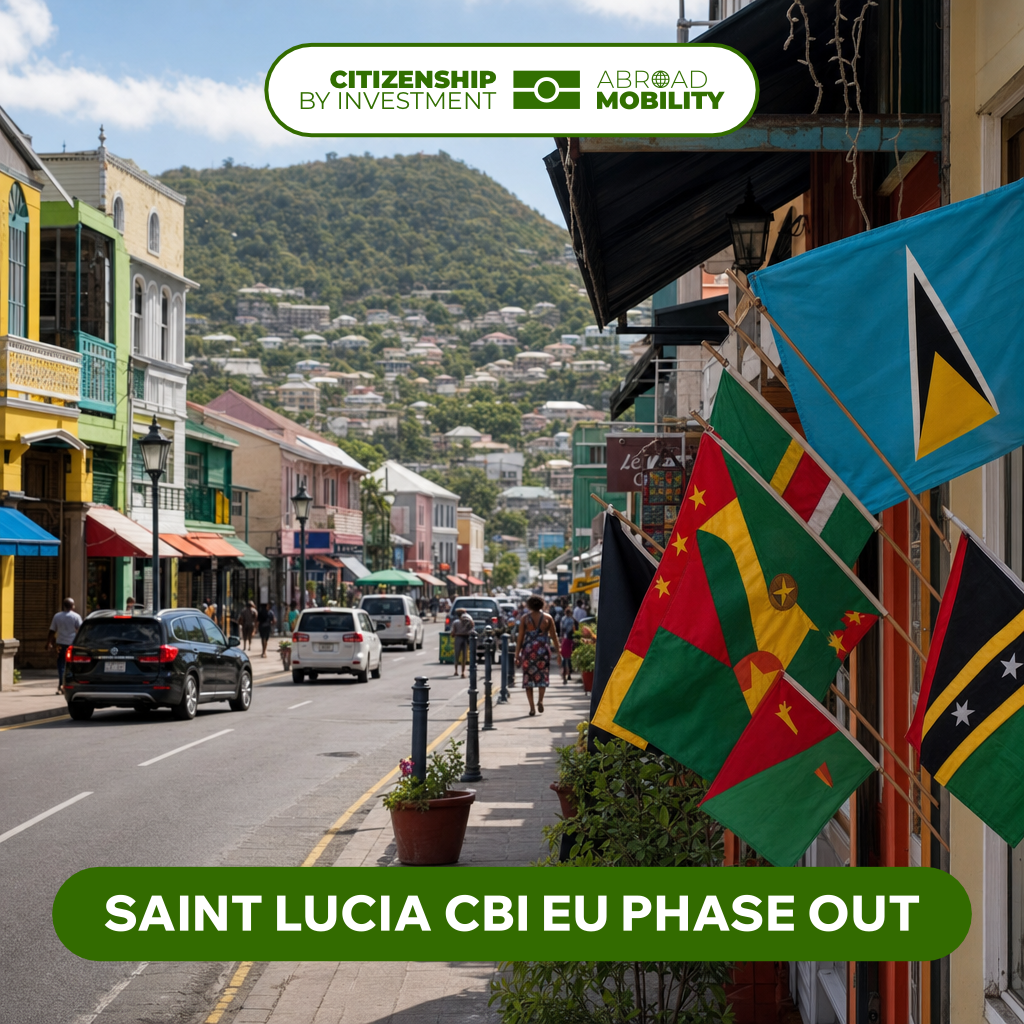
A recent Saint Lucia government account of EU engagement referenced a European Commission request that Eastern Caribbean countries operating citizenship by investment programmes phase them out by June 2028. Separate EU materials set out how the EU can operationalise pressure through Schengen visa policy, including an updated visa suspension mechanism that now explicitly names the operation of an investor citizenship scheme as a suspension ground.
This explainer lays out practical, compliance first language you can use with clients, plus a jurisdiction-by-jurisdiction watchlist for what to track next across the Eastern Caribbean programmes discussed in EU reporting.
What The EU “Phase-Out Request” Means In Practice
A Saint Lucia Ministry of Legal Affairs item describing a meeting between Prime Minister Philip J. Pierre, regional officials, and an EU Commissioner framed the discussion around the future of citizenship by investment programmes following the European Commission’s request that Eastern Caribbean countries operating such programmes phase them out by June 2028.
For a compliance first client file, treat that phrasing as a documented political signal that needs ongoing monitoring, then separate it from the EU’s formal tools. The EU materials in hand focus on Schengen visa policy outcomes rather than on the validity of citizenship issued by a third country.
The European Commission’s visa policy overview sets the baseline scope of Schengen visa free travel as short stays of up to 90 days in any 180 day period. The same policy framework explains the visa suspension mechanism, which allows the temporary suspension of visa free travel to the Schengen area for nationals of a third country.
The EU Mechanism That Creates Mobility Risk For CBI Clients
1) The new ground explicitly references investor citizenship schemes
EU rules around suspension now expressly include investor citizenship schemes as a ground. The amending text published by the Council of the European Union adds, in Article 8a on grounds for suspension, a ground tied to “the operation, by a third country listed in Annex II, of an investor citizenship scheme, whereby citizenship is granted without any genuine link to the third country concerned, in exchange for pre determined payments or investments.”
On 17 June 2025, the European Commission also framed “the operation of investor citizenship schemes” as one of the new grounds to suspend visa free regimes in its announcement welcoming agreement on a stronger and more flexible visa suspension mechanism.
2) The mechanism is built to be triggered and extended
The Commission’s visa policy explainer describes an initial suspension period of up to 12 months, with the possibility of an extension for a further 24 months. It also notes targeted application is possible, for example to government officials or diplomats. The Council’s amending text adds that the mechanism can be triggered through a notification of a Member State or through the Commission’s own analysis, then carried through implementing and delegated acts where the grounds persist.
3) Eastern Caribbean schemes are explicitly flagged in EU reporting
In its Eighth Report under the Visa Suspension Mechanism (COM(2025) 792 final, dated 19.12.2025), the European Commission concluded that the continued operation of investor citizenship schemes in the Eastern Caribbean represents a persistent and serious security concern and constitutes a potential ground for the suspension of visa free travel under the revised system. The same report states it covers the year 2024 as well as major developments in 2025.
A non obvious implication for client communications
Because the mechanism is framed around visa free travel for nationals of a third country, the mobility consequences attach at the nationality level rather than at the acquisition route level. In practice, that means client risk screening should treat Schengen access risk as an externality that can affect every holder of that nationality, not only people who acquired citizenship through an investor route.
Client Messaging: Use A Clear “Three Bucket” Structure
For file notes and client facing summaries, it helps to separate the story into three categories and keep each statement anchored to the category.
- Political engagement: meetings, requests, and regional dialogue, including the Saint Lucia account that references a request to phase out by June 2028.
- Legal framework enabling action: Regulation (EU) 2018/1806 as amended, and the suspension grounds that now include the operation of an investor citizenship scheme.
- Implementation: a Commission implementing act or delegated act applying a suspension. The Commission’s visa policy page gives an example of targeted suspension for another country’s diplomatic, service, and official passports effective from March 6, 2026, until March 6, 2027, which is a useful reference point for what a published implementation looks like.
What Has Not Changed For Your Casework
The materials at issue operate at the level of EU Schengen visa policy. They do not replace casework fundamentals for any client considering citizenship by investment: you still need disciplined eligibility assessment, evidence led source of funds preparation, and a documentation package that stands up to due diligence review.
From a practice management standpoint, this is also a moment to document assumptions. Where a client’s objective hinges on Schengen visa free access, the file should treat that objective as exposed to EU level actions taken under the suspension mechanism.
Teams using a partner model can keep this structured by separating discovery from programme selection. Abroad Mobility’s Eligibility Engine can support an early screen, then the client file can point to the specific EU mechanism and the specific watch items below.
What To Track Next: EU Documents And Jurisdiction Watchlists
EU side documents to monitor across all five Eastern Caribbean schemes
If you want a single “source of truth” stream for mobility risk, focus on EU artefacts that can change visa free access in a formal way.
- Regulation (EU) 2018/1806 and its amendments, including the suspension mechanism referenced on the Commission’s visa policy page as “Article 8 of Regulation (EU) 2018/1806, as amended by Regulation (EU) 2025/2441.”
- Commission implementing acts and delegated acts under the suspension mechanism (including the articles introduced in the amending text), since those are the publication forms the mechanism contemplates for a 12 month suspension and a potential 24 month extension.
- Annual Visa Suspension Mechanism reporting, including the Commission’s COM(2025) 792 final report, which explicitly characterises the Eastern Caribbean schemes as a persistent and serious security concern and links them to potential suspension grounds under the revised mechanism.
Jurisdiction specific items to track next
The European Commission has referenced “five Eastern Caribbean states operating investor citizenship schemes” as Antigua and Barbuda, Dominica, Grenada, Saint Kitts and Nevis, and Saint Lucia. For each, track domestic and regional communications for formal decisions, and keep your Schengen mobility risk analysis tied to EU level acts and reports.
Saint Lucia
- Further Government of Saint Lucia updates following the Ministry of Legal Affairs meeting item referencing a request to phase out by June 2028.
- The regional statement titled “Statement by participating Heads of Government of CIP on European Union” hosted on Saint Lucia’s Ministry of External Affairs website.
Antigua And Barbuda
- Official Government communications for explicit references to EU engagement and any announced commitments or reforms linked to that dialogue.
Dominica
- Official Dominica government communications regarding EU engagement and any policy changes.
- Regional joint statements hosted on participating states’ official portals, including the Saint Lucia External Affairs statement that references a meeting held in Roseau, Dominica.
Grenada
- Official Grenada government communications regarding EU engagement and any programme level reforms.
- EU side measures listed above, given their direct connection to Schengen visa free continuity risk.
Saint Kitts And Nevis
- Official Saint Kitts and Nevis government or programme communications relating to EU dialogue, regional harmonisation, and compliance actions.
- EU side documents as above.
How To Keep Advice Useful Without Overstating The Timeline
Where a client asks about June 2028, the safest approach is to treat it as a dated reference point in an EU to government conversation that can support a continuity risk discussion. A client recommendation still needs to be grounded in live legal instruments and published EU actions under the visa suspension mechanism, plus the client’s own objectives and tolerance for regulatory change.
If your firm supports clients who want a second nationality for travel planning, a structured selection process that documents the mobility goal, the risk acceptance, and the monitoring plan can reduce misunderstandings later. The How to Choose a Passport framework can help anchor that conversation in criteria and documentation rather than headlines.
EU pressure language and EU legal tools are different categories, and your client notes should keep them distinct. The practical control point is Schengen visa policy, including a revised suspension mechanism whose grounds now explicitly include the operation of an investor citizenship scheme, plus ongoing Commission monitoring through Visa Suspension Mechanism reporting.
If you want to pressure test a client file for continuity and mobility risk, Abroad Mobility can support a structured intake and co-management workflow with a compliance first posture. Start with our Partnership / Co-Management model and share the scenario you are seeing most often in your practice.
Start a compliance-first review with Abroad Mobility
Sources: