A practical brief for advisors serving retirees and families with stable passive income seeking Portugal residence
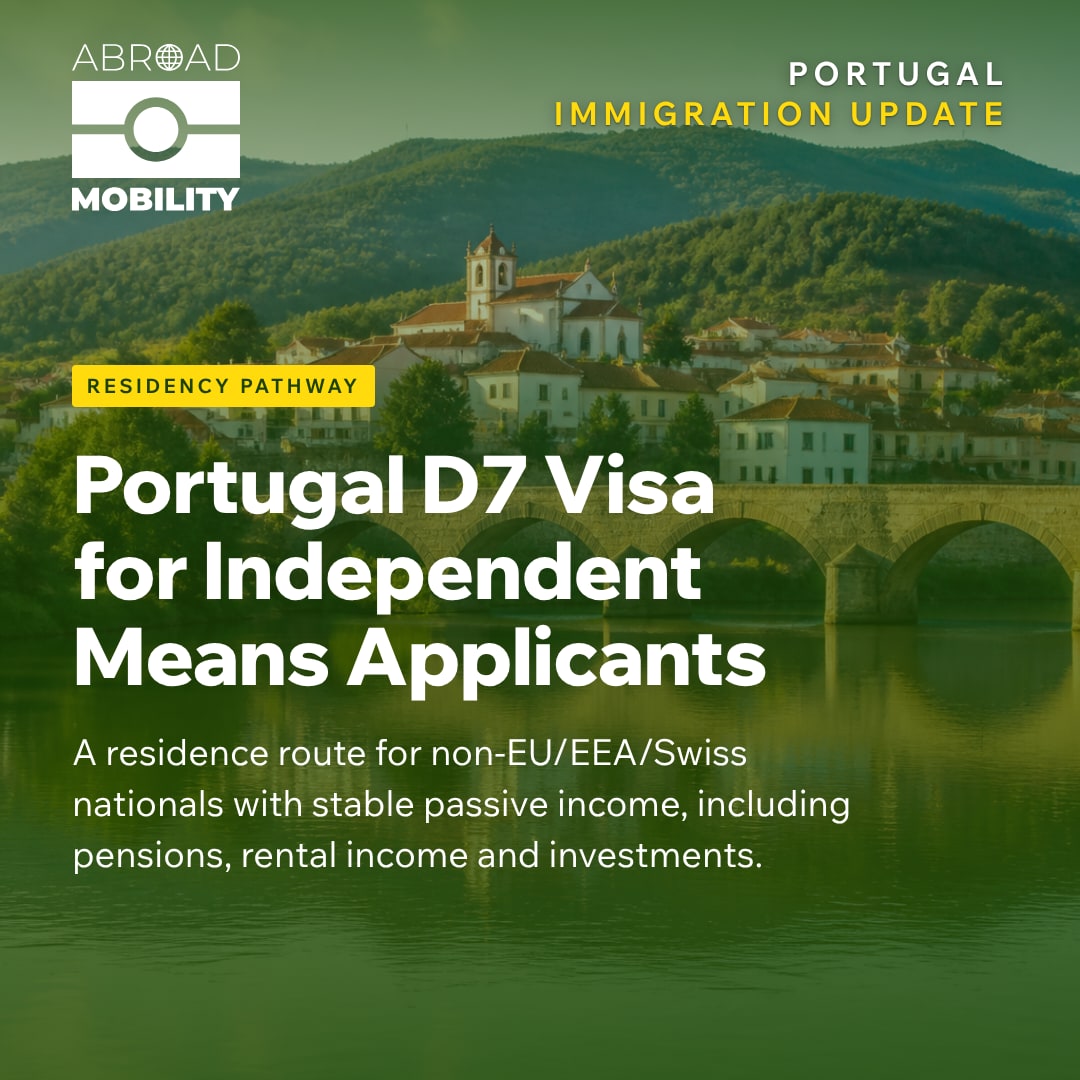
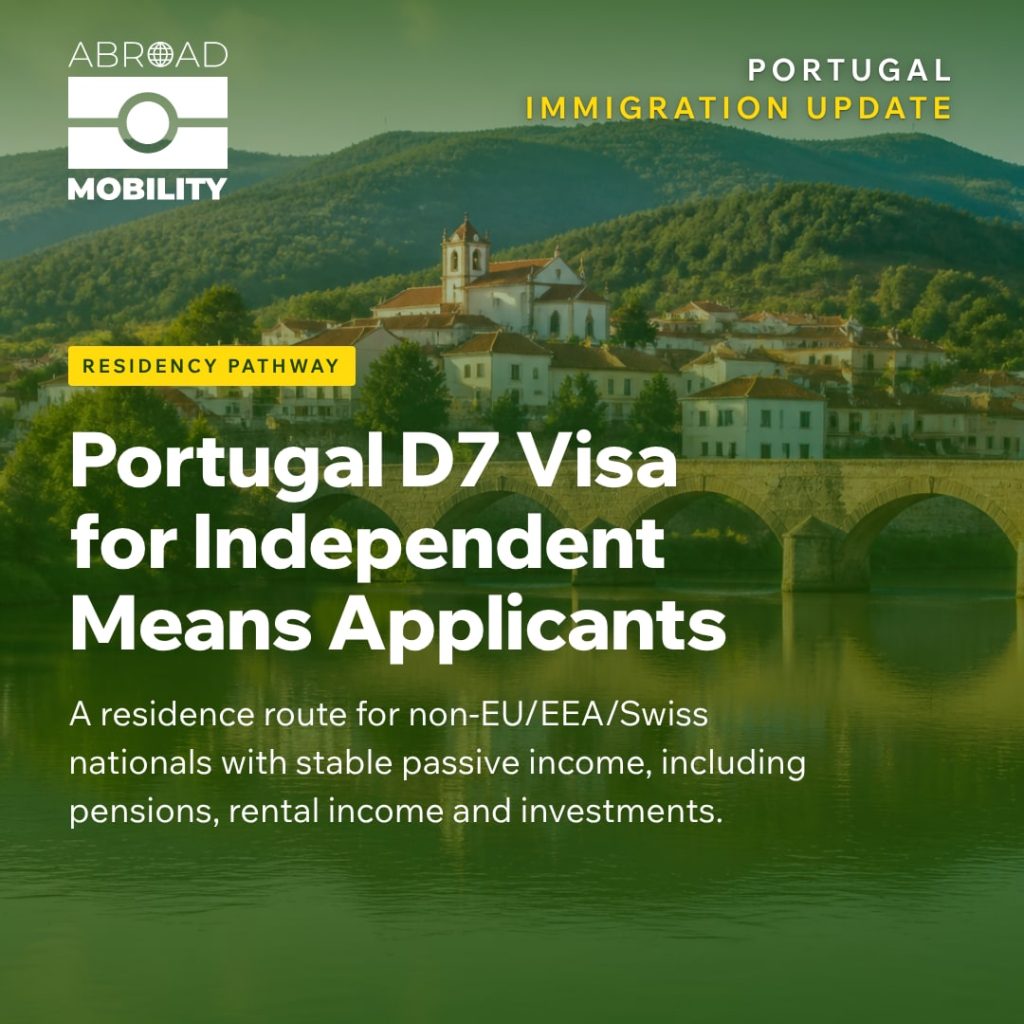
For clients who can support themselves through regular passive income, the Portugal D7 Visa offers a residence route designed for independent means applicants, including retirees, pensioners, remote workers with independent means, and individuals with stable overseas income. Successful applicants and eligible family members receive Portuguese residency permits with a path to permanent residency after five years and eligibility for citizenship within five years, subject to language and other standard requirements. In many practices, it is a fit for clients who want an EU residence solution without an investment in Portuguese businesses or real estate, while keeping the case preparation compliance-first and documentation-driven.
Who The Program Fits
The Portugal D7 Visa is aimed at non-EU/EEA/Swiss nationals who can demonstrate sufficient stable passive income. In client terms, this often includes retirees and pensioners, families living on investment or rental income, and globally mobile individuals with regular overseas income such as royalties. It can also suit remote workers when the financial profile is best characterized as independent means rather than employment-based relocation.
From a planning perspective, the program’s central value proposition is residence in Portugal that can lead to permanent residency after five years and eligibility for citizenship within five years (subject to language and other standard requirements), without requiring an investment in Portuguese businesses or real estate. For many clients, Portugal residency also supports visa-free travel within the Schengen Area.
If your firm is pressure-testing whether a client profile is truly “independent means,” an early-screening workflow through Abroad Mobility’s Eligibility Engine can help structure the intake around the required income story and family composition.
Eligibility And KYC/AML Considerations
The core eligibility anchor is stable passive income at a minimum level tied to the Portuguese guaranteed minimum monthly remuneration. The threshold increases with family size: an additional 50% for each additional adult and 30% for each child under 18 or dependent child.
Qualifying income types include pension income, rental income, investment income, or similar regular passive income streams. In practice, positioning the file comes down to demonstrating stability and continuity, with documentary support that is consistent across declarations, bank flows, and supporting contracts or statements.
Where your compliance process is strongest is where your case management is easiest. Most D7 files benefit from upfront KYC and source-of-funds coherence checks, especially where income is investment-derived or multi-jurisdictional.
Key figures
50%
additional income threshold for each additional adult
30%
additional income threshold for each child under 18 or dependent child
five years
path to permanent residency after residence
Costs
The cost structure usually includes filing fees, document legalization and translation, private health insurance where applicable, police certificates, and optional legal or relocation support. In practice, total document and setup costs often land around USD $2,800, depending on the applicant profile, family composition, and any optional support.
| Cost Area | What It Commonly Covers |
|---|---|
| Document and setup costs (typical all-in) | Filing fees, document legalization and translation, private health insurance where applicable, police certificates, and optional legal or relocation support. Total often lands around USD $2,800 depending on the file. |
For advisors who need a clean program snapshot for client-facing conversations, you can reference the program page for positioning and scope: Portugal D7 Visa.
Process And Timeline
Practically, your casework is structured around documenting eligibility, preparing the supporting file, and coordinating submission and follow-through with the relevant authority. Time to obtain the status depends on the authority and the specifics of the case.
At the advisory level, setting expectations early is mainly about readiness and sequencing: how quickly a client can assemble police certificates, complete any required document legalization and translation, and align insurance coverage where applicable.
D7 casework sequence
1Document eligibility. Build the file around stable passive income and the required family-linked threshold.
2Prepare supporting evidence. Assemble police certificates, legalization and translation, and private health insurance where applicable.
3Coordinate submission. Submit and follow through with the relevant authority, with timing dependent on the authority and the case specifics.
Family And Dependents
Family eligibility can be central to D7 case selection. Eligible dependents include a spouse or partner, children under 18 and dependent adult children who are single and studying in Portugal, plus dependent parents. Each dependant raises the required income threshold and pays a separate permit fee.
In intake, it is worth capturing dependency status with documentation in mind, especially for dependent children over 18 and dependent parents, since the dependency narrative often drives the supporting evidence set and the budget discussion.
Q
Which family members can be included in a D7 file?
Eligible dependents include a spouse or partner, children under 18, dependent children under 25 in full-time education, and dependent parents. Each dependant raises the required income threshold and pays a separate permit fee. Capture dependency evidence during intake.
Compliance Notes For File Preparation
- Income narrative: present a stable passive income story (pension, rental, investment or similar) that is consistent across documents and client declarations.
- Family-linked thresholds: calculate the income requirement using the guaranteed minimum monthly remuneration baseline, plus 50% per additional adult and 30% per qualifying child.
- Document readiness: plan for document legalization and translation, and build these lead times into your client’s internal deadlines.
- Police certificates and insurance: ensure police certificates are obtained in time, and address private health insurance where applicable as part of the setup sequence.
If your firm supports broader Portugal planning conversations alongside D7 screening, you may also want this Portugal hub page on hand for adjacent residency pathways: Portugal Residency by Investment.
If you want to sanity-check a client’s income profile, dependent mix, and documentation plan before you set expectations, Abroad Mobility can co-manage the eligibility screen and case workflow while you remain the client-facing advisor. Request program details or start a client scenario intake here: program intake.
This information is general and subject to change, and it is not legal advice.