A new opportunity has emerged on the global mobility landscape. Moldova has officially introduced its Digital Nomad Visa, offering remote professionals, entrepreneurs, and internationally mobile clients a simple pathway to temporary residence in Europe. Designed for individuals earning income from abroad, the program allows digital professionals to live and work remotely from Moldova while maintaining their international business activities. For immigration advisors and globally mobile clients, this program represents a practical addition to the growing portfolio of digital nomad and remote work visas worldwide. At Abroad Mobility, we are already working with trusted local partners in the region and can assist our clients and professional partners with detailed guidance, eligibility assessment, and application support for this new program.
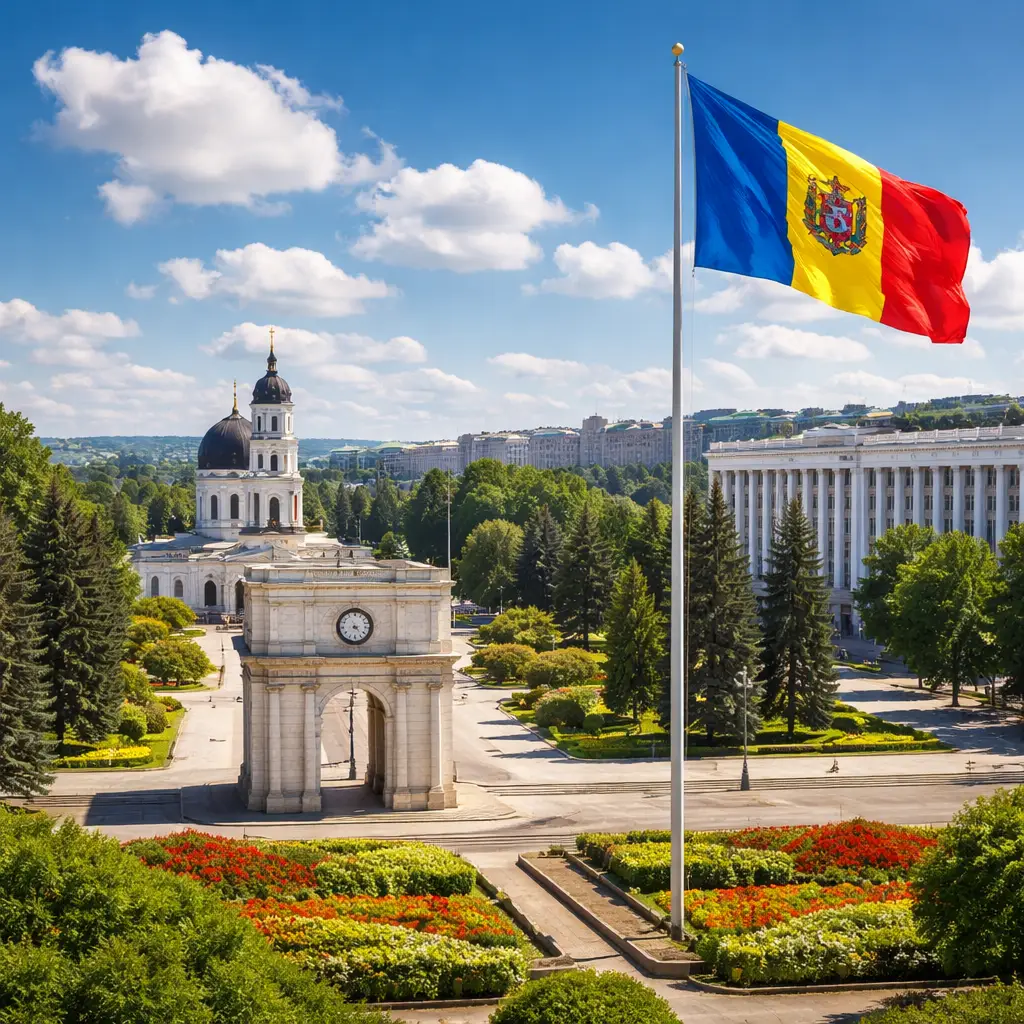
A New Offering for Globally Mobile Entrepreneurs
Moldova has officially introduced a dedicated “digital nomad” residence category, effective September 20, 2025, allowing qualifying foreign nationals to obtain temporary residence while working remotely for income generated outside Moldova (igm.gov.md). For AbroadMobility partners, this is a useful new tool: it gives clients a legally recognized European base without requiring a local employment contract or large capital investment, and it comes with unusually clear statutory criteria for eligibility and documentation (legis.md).
What the program is (and who it is for)
Under Moldovan law, a “digital nomad” is a foreign national who performs remote work using information and communications technology under an employment or services contract with a legal entity registered outside Moldova, or who is a shareholder/partner/administrator (and even a remote manager) of a foreign legal entity (legis.md). In practical terms, it is intended for high-income founders, consultants, executives, and remote specialists who want to live in Moldova beyond the standard legal stay period while continuing foreign-sourced work (legis.md).
The official implementation guidance also makes the “foreign income” principle explicit: digital nomads are expected to work exclusively for legal entities registered outside Moldova (invest.gov.md). This is important for compliance and for setting client expectations: this program is not a substitute for a local Moldovan work permit.
Overview: eligibility, income threshold, documents, duration, renewal

Eligibility (core requirements) Moldova’s legal framework sets two key conditions for digital nomad residence:
- The applicant must qualify as a digital nomad (remote work for a foreign entity, or a qualifying ownership/management role in a foreign company) (legis.md).
- The applicant must prove sufficient monthly means of support derived from the remote activity, tied to Moldova’s forecast average salary (legis.md; igm.gov.md).
Income threshold (2026 estimate) The law requires proof of monthly means of support “in the amount of at least 18 forecast average salaries for the current year” evidenced over the last 6 months prior to filing (legis.md). Moldova’s government approved the forecast average monthly salary for 2026 at 17,400 MDL (legis.md). Practically, IGM clarifies this as “three salaries per month” for the last six months (igm.gov.md). Using the official 2026 forecast, this equates to roughly 52,200 MDL per month (about USD 3,000 at the National Bank’s official rate shown below), evidenced across six months of bank history. Always confirm the “current year” salary figure at the time of filing, as the threshold is indexed annually (legis.md; igm.gov.md).
Required documents (high-level checklist) IGM publishes a clear document list for both “granting” and “extension.” For most applicants, this includes:
- Application for granting/extending temporary residence (can be completed at the IGM One-Stop Shop) (igm.gov.md)
- Valid travel document (passport) (igm.gov.md; legis.md)
- Proof of accommodation in Moldova (lease agreement, or accommodation services contract with a hotel organization) (igm.gov.md; legis.md)
- Criminal record certificate (or equivalent), legalized/apostilled and translated into Romanian or English; special rule applies if the applicant has lived legally for at least two years in a country other than their citizenship country (igm.gov.md; legis.md)
- Proof of valid medical insurance in Moldova (igm.gov.md; legis.md)
- Bank statement (Romanian or English) showing qualifying monthly income for the last six months (igm.gov.md; legis.md)
Depending on whether the applicant is employed/contracted vs. a shareholder/partner, additional documents apply:
- Employment or services contract with a foreign legal entity, legalized/apostilled and translated (igm.gov.md; legis.md)
- A sworn statement confirming remote work (igm.gov.md; legis.md)
- For shareholders/partners: a recent (last 3 months) document from the foreign company’s registration jurisdiction confirming the entity is not insolvent or in liquidation and confirming the applicant’s shareholder/partner status, legalized/apostilled and translated (igm.gov.md; legis.md)
Duration and renewal
The statute states the digital nomad temporary residence is granted for the requested period, but it cannot exceed two years, with the possibility of extension for a new period. Separate official guidance also describes the program as a two-year permission with renewal potential. If your client’s longer-term plan is eventual permanence, note that Moldova has separate rules for permanent stay eligibility that generally require holding temporary residence for a defined period; treat this as a longer-stage strategy and confirm case-by-case (igm.gov.md).
Application timeline and estimated government fees (USD)
Timeline IGM’s published process framework explains that residence decisions can take up to 90 calendar days for some categories, but program-specific advisories and the digital nomad checklist indicate typical processing in the “about a month” range once a complete file is accepted (igm.gov.md; www.fragomen.com). Practically, partners should forecast 30–45 calendar days in many cases, while maintaining a conservative buffer for document corrections or peak-season administrative load (igm.gov.md; www.fragomen.com).
Where and how to apply IGM’s standard process states the applicant submits the application in person at an IGM One-Stop Shop with originals and copies, and IGM may reject an incomplete file and request corrections (igm.gov.md). Invest Moldova notes submission can be done in person or through an authorized representative, which may help some clients depending on representation rules and power-of-attorney setup (invest.gov.md). Because practice can vary and online submission references appear in some advisories, we recommend confirming the current filing method for the client’s nationality and case profile with local counsel and the receiving IGM office (igm.gov.md; www.fragomen.com).
Government fees (estimated in USD for standard processing) IGM’s official fee schedules show, for “work purposes,” a state fee of 3,600 MDL to grant temporary residence, plus a GIM service fee that can be 90 MDL for a standard review timeline (igm.gov.md; igm.gov.md). Issuance also involves residence permit issuance fees and residence card production/personalization fees (igm.gov.md). Using the National Bank of Moldova official exchange rate on 05.03.2026 (1 USD = 17.3326 MDL), a typical baseline bundle often lands around USD 240–280 in government charges for standard processing and standard card issuance, before third-party costs like translations, apostille/legalization, insurance, and couriering (bnm.md; igm.gov.md). Expedited card issuance can increase fees materially (igm.gov.md). We recommend quoting a “government fees only” range and clearly separating service/legal costs.
Practical benefits for wealthy individuals and entrepreneurs
A legal, flexible Europe base without buying property Unlike many “residency by investment” frameworks, Moldova’s digital nomad route is income-based rather than capital-based. For clients who prefer liquidity (or who want to avoid real estate mandates), this provides a compliant pathway built around documented foreign income and a clear remote-work relationship (legis.md; invest.gov.md).
Predictability:
rules are written into law and supported by IGM checklists One of the strongest characteristics of this program is that eligibility is not “grey market.” The definition, conditions, and duration are spelled out in the foreigners’ regime law, including the exact income threshold formula and documentary requirements (legis.md). IGM then publishes step-by-step checklists that match the statutory framework (igm.gov.md). For partners, that reduces back-and-forth and makes client onboarding easier.
Tax and residency planning relevance (important caveat)
A residence permit is not the same thing as tax residency. Moldova tax residency is generally triggered by domicile or presence exceeding 183 days in a fiscal (calendar) year, and it can be affected by double tax treaties (taxsummaries.pwc.com). PwC’s 2026 overview also notes standard personal income taxation commonly applies at 12% for many categories of income, with separate rules for non-residents and specific income types (taxsummaries.pwc.com). High-net-worth clients should treat tax outcomes as a planning exercise: days in country, source of income, and treaty positions can materially change the result. We strongly recommend a local tax review before a client “moves the center of life” to Moldova (taxsummaries.pwc.com). Where a particular tax point is uncertain for your client’s structure, confirm with Moldovan tax counsel.
Lifestyle and cost-of-living positioning
Moldova has become increasingly interesting as an “affordable Europe” base. Directional cost-of-living comparisons (based on crowd-sourced data) suggest materially lower day-to-day costs than major Western markets; partners should present this as an estimate, not a guarantee (numbeo.com). For many entrepreneurs, this can be attractive for building a quieter operational base while maintaining access to regional travel.
Travel and mobility considerations: entry rules still matter Digital nomad residence does not grant EU/Schengen freedom of movement. Clients still enter Moldova under Moldova’s visa regime and must follow entry rules for their nationality. Moldova offers an e-Visa system for short-stay visas and publishes visa categories and limitations (egov.md; iasi.mfa.gov.md). Short-stay rules generally follow a 90 days in any 180-day window concept, and some categories require a long-stay visa to apply for residence, subject to exceptions (iasi.mfa.gov.md; igm.gov.md). Because visa requirements depend heavily on citizenship, partners should treat entry mechanics as a case-specific prerequisite.
Common pitfalls and compliance notes (what to get right the first time)
“Digital nomad” is not local employment authorization This residence category is built around foreign-sourced remote work for a foreign legal entity or a qualifying foreign ownership/management role (legis.md; invest.gov.md). If a client intends to work for a Moldovan employer, they likely need a different immigration basis. Partners should position this program accordingly.
Apostille/legalization and translation are not optional IGM requirements repeatedly specify apostille/legalization and translation for criminal records and foreign contracts (igm.gov.md; legis.md). This is a frequent failure point in new programs because clients underestimate lead times.
Filing deadlines: do not wait until the end of legal stay IGM’s digital nomad checklist notes that documents must generally be submitted 30 calendar days before the expiration of the stay period (and EU citizens have a shorter minimum filing window in some cases) (igm.gov.md). Missing the deadline can trigger administrative sanctions and a forced “reset” of the plan.
Proof of income must match the indexed threshold and the correct format Bank statements are required in Romanian or English and must show qualifying monthly income for the last six months (igm.gov.md; legis.md). Because the salary benchmark changes by year, partners should recalculate the threshold for the filing year using official government data and then confirm the bank statement format meets IGM expectations (legis.md; igm.gov.md).
How AbroadMobility supports partners and client cases
AbroadMobility is built for immigration professionals who want to expand program coverage without building a full global back office. Through our partner-first, service model, we handle the operational burden while you stay client-facing: eligibility screening, document lists, compliance-ready packaging, translation/apostille coordination, local filing support, and end-to-end case tracking.
For broader positioning and a structured country comparison, you can reference our primary frameworks and tools: