A Compliance-First Brief For Advisors Structuring Long-Term Korean Residency Through Capital Placement
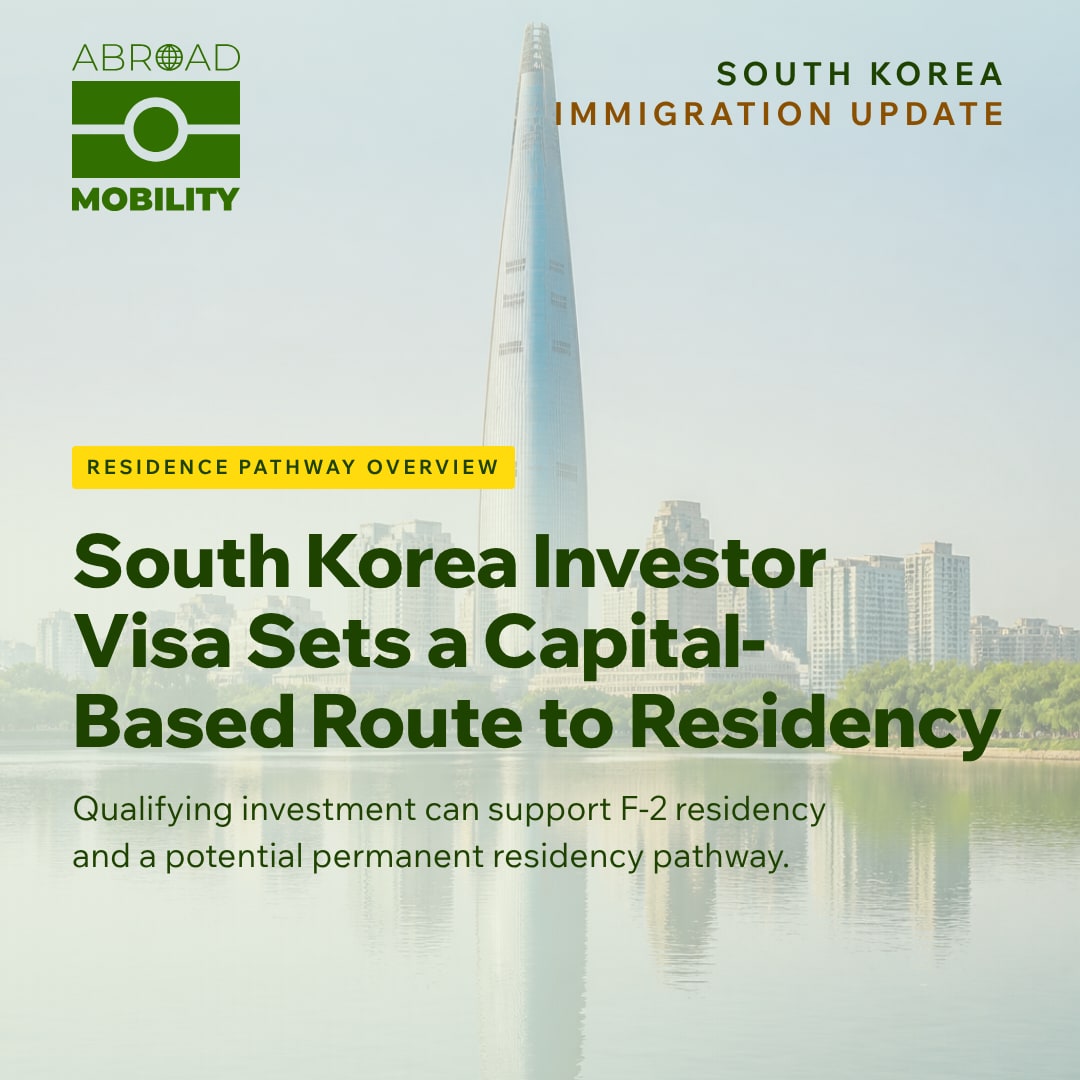
When your firm is advising high-net-worth clients who want a medium-to-long-term base in Asia, the South Korea Investor Visa is a structured residence by investment pathway built around a qualifying capital placement. It can lead to an F-2 long-term resident visa, with a potential pathway to permanent residency (F-5) after maintaining the qualifying investment for at least five years, and possible later citizenship subject to South Korea’s separate naturalisation, residence, language, integration, and eligibility requirements.
Who The Program Fits
This program is designed for high-net-worth individuals seeking South Korean residency through significant financial investment, with an orientation toward medium-to-long-term planning rather than short-term travel outcomes. In practice, it tends to fit clients who can allocate a substantial amount of capital into a designated channel and who value a defined residence pathway with family inclusion.
From a case-shaping perspective, it is also relevant where your clients want a pathway that is tied to a maintained investment position over time. If you are screening fit across multiple program types, Abroad Mobility can support early-stage eligibility assessment through the Eligibility Engine, then move into case co-management once the client profile and route are confirmed.
Eligibility And KYC/AML
Applicants seek an F-2 long-term resident visa by making a qualifying investment in designated real estate, public business, or designated development projects. The program is characterized by a well-defined investment structure, but it also brings administrative complexity, so front-end organization of documentation and transaction steps matters.
No language or education requirements are clearly stated initially. Basic language or integration requirements do not apply later if the client progresses toward permanent residency.
Investment Requirement
The stated investment threshold is route-specific, currently listed at KRW ₩1,000,000,000 to ₩1,500,000,000 in designated real estate, public business, or development projects, depending on the channel. Structuring should keep the focus on maintaining the qualifying investment for the period relevant to permanent residency eligibility.
Key figures
KRW ₩500,000,000
stated minimum investment
USD $375,000
approximate starting estimate
at least five years
qualifying investment maintenance period for potential permanent residency eligibility
Costs
A typical budget for the South Korea Investor Visa includes government filing fees, legal support, due diligence, document legalization, and the qualifying investment, contribution, or capital placement. For planning purposes, clients often work around USD $375,000 as a starting estimate, but actual totals vary by family size, route mix, and legal or due-diligence scope.
| Cost Item | How It Is Typically Budgeted |
|---|---|
| All-in planning estimate | Clients often plan around USD $375,000 as a starting estimate, inclusive of government filing fees, legal support, due diligence, document legalization, and the qualifying investment, contribution, or capital placement (totals vary by family size, route mix, and legal or due-diligence scope). |
For your practice, the operational takeaway is to separate client budgeting into two tracks early: the qualifying capital placement itself and the professional, filing, and legalization work that supports the case execution and audit trail.
Process And Timeline
Applicants can obtain the initial resident status, with timelines depending on the authority and the case. Advising value is often highest in the sequencing: confirming the eligible investment channel, aligning documentation to the investment route, and ensuring the client’s file is consistent with the expected due diligence and legalization steps.
For a program-specific intake and case planning workflow, you can share the Abroad Mobility program page with your client internally as part of your option set, then coordinate next steps through your firm’s preferred engagement structure: South Korea Investor Visa.
Family And Dependents
The program is positioned with pathways for family inclusion, which makes early file design important. Family size is also a driver of overall budgeting and documentation load, so it is useful to scope dependents at the first fact-find and keep document collection and legalization aligned across the family unit.
Compliance Notes
- Route confirmation: Match the investment channel to the program’s designated categories (designated real estate, public business, or government development funds) before document collection begins.
- Documentation discipline: Plan for document legalization as part of the core workstream, not as a last-step add-on.
- Due diligence readiness: Treat source-of-funds and transaction records as a single narrative that should remain consistent across filings, legal support work, and the investment execution.
- Long-horizon planning: If the client’s objective includes permanent residency, keep the file organized around the requirement to maintain the qualifying investment for at least five years, and flag that language or integration requirements may apply later at the permanent residency stage.
Where Abroad Mobility Fits
Abroad Mobility supports Canadian immigration professionals through a co-managed partnership model, so your firm stays client-facing while we coordinate the international solution, documentation workflow, and program-side execution. For firms building a broader outbound mobility offering, the Partnership / Co-Management track is the typical starting point for establishing process, communication cadence, and secure intake standards.
If you have a client scenario that may suit South Korea’s Investor Visa, send a short profile and proposed family composition so we can confirm program fit, map the investment route, and set up a case plan aligned with documentation, legalization, and due diligence expectations: request program details through Abroad Mobility.
This information is general and may change over time, and it is not legal advice.