
What Is Confirmed On Pricing, Dependents, And The APCI To National Migration Directorate Route
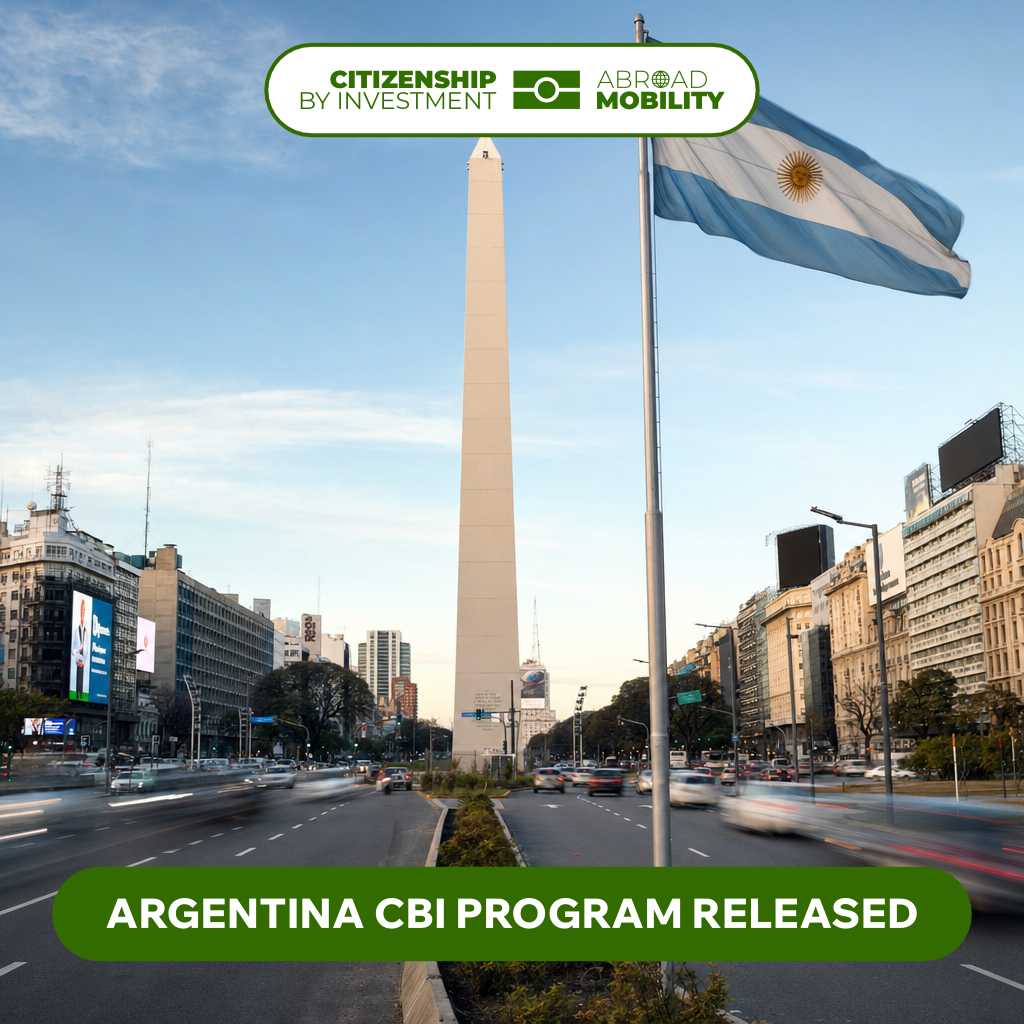
Argentina has publicly set price points and a launch window for a new “Citizenship by Investment Program.” The official announcement dated 2nd October 2026 says the program will be operational to receive applications during the fourth quarter of 2026, with two stated mechanisms at USD 350,000 and USD 800,000.
For advisers, the immediate task is client expectation management. The same official materials that confirm pricing and the institutional workflow (APCI evaluation and recommendation, then a decision by the Dirección Nacional de Migraciones (National Migration Directorate)) do not yet publish the working items that determine advisory effort: forms, a full documentary checklist, program regulations, or confirmed service level timeframes.
Below is a source disciplined breakdown of what is confirmed, what is only industry reported, and how to discuss Argentina’s entry price and operational readiness against specific Caribbean baselines that have official public fee and minimum disclosures.
What Argentina Has Officially Confirmed (As Of 2nd October 2026)
Intake Window And Two Investment Mechanisms
The federal announcement page dated 2nd October 2026 states the program will be operational to receive applications during the fourth quarter of 2026. It also describes two simple and transparent mechanisms with exact amounts: a direct non-refundable contribution to the National Treasury of USD 350,000, or subscription for a public security of USD 800,000 created specifically for the Program.
Dependents And Additional Treasury Contributions
The same announcement confirms that the spouse and children of the main applicant may apply, provided they evidence the relationship and make the contributions applicable to each category. It sets the dependent contributions as follows: spouses and children aged 18 to 25, unmarried and without children, can apply via a Treasury contribution of USD 100,000, and children under 18 via USD 25,000.
It also provides a worked example for adviser quoting: a typical family group made up of a principal applicant, spouse, and two minor children totals “USD 500,000.” In client conversations, this official example is useful because it anchors both the dependent pricing and the program’s current public framing of a typical household case.
Stated Due Diligence Scope And Formal Banking Channeling
Argentina’s announcement says standards of due diligence, financial transparency, and risk management will be incorporated, aligned with recommendations of the OECD and the FATF. It also states that all funds must be routed through the formal financial system, with compliance to AML, counter terrorism financing, and transparency standards.
The evaluation content described includes: identity verification, traceability and lawfulness of source of funds, patrimonial and financial analysis, jurisdictional risk evaluation, criminal and reputational background review, and migration history. For a firm building intake and file strategy, this list signals that source of funds narrative and third party document corroboration will likely be central to case preparation, even before forms and checklists are published.
Institutional Workflow And Decision Authority
The announcement states the evaluation of applications will be led by the “Agencia de Programas de Ciudadanía por Inversión” (Citizenship by Investment Programs Agency, APCI) and names participating bodies, including the “Secretaría de Inteligencia del Estado (SIDE)” (State Intelligence Secretariat), the “Unidad de Información Financiera (UIF)” (Financial Information Unit), and the “Ministerio de Seguridad” (Ministry of Security) and the “Ministerio del Interior” (Ministry of the Interior). After evaluation, the Agency sends its recommendation to the “Dirección Nacional de Migraciones” (National Migration Directorate), which is identified as the body that approves or rejects each application.
On the normative side, the page titled “TEXTO ORIGINAL – Decreto 524/2025 – PODER EJECUTIVO NACIONAL” (Original Text – Decree 524/2025 – National Executive Branch) shows publication in the Boletín Oficial (Official Gazette) on 31-07-2025 (Boletín Oficial number: 35718) and confirms the architecture that places APCI as the receiver of applications and the body that recommends approval or rejection to the Dirección Nacional de Migraciones.
Process Implications For Advisers: APCI Assessment To National Migration Directorate Decision
What The Official Materials Support You Saying
At a minimum, you can describe the process in two stages: an APCI led evaluation that involves inter agency inputs (with SIDE, UIF, and the named ministries referenced) and a downstream decision by the National Migration Directorate to approve or reject. That division of roles matters for client expectations because it signals that an “investment made” does not equate to an approval decision, and that the evaluation includes both financial and background vetting components before a recommendation is formed.
The “30 Business Days” Question
A “Resolution period: 30 business days from receipt of the complete application” statement is referenced only via an APCI website search snippet captured at apci.ar, but the underlying page could not be opened for verification in the retrieved materials. The official Argentina.gob.ar announcement and the excerpted decree text retrieved do not provide a verifiable “30 business days” rule in the lines available.
In practice, for professional client management, treat “30 business days” as a talking point that remains to be validated in a fully accessible primary text, especially on (1) which authority’s clock it describes, (2) the trigger event (“complete application” versus other milestones), and (3) whether requests for information pause or reset the timeline.
Fees And Investment Routes (Confirmed Figures Only)
| Item (Argentina Citizenship by Investment Program) | Officially Stated Amount | What The Official Text Says It Is |
|---|---|---|
| Mechanism 1 (principal applicant) | USD 350,000 | direct non-refundable contribution to the National Treasury |
| Mechanism 2 (principal applicant) | USD 800,000 | subscription for a public security created specifically for this Program |
| Spouse | USD 100,000 | Treasury contribution for spouses |
| Child aged 18 to 25 (unmarried, no children) | USD 100,000 | Treasury contribution for children aged 18 to 25, unmarried and without children |
| Child under 18 | USD 25,000 | Treasury contribution for children under 18 |
| Worked example (principal + spouse + two minors) | USD 500,000 | Official example total for a typical family group |
This table follows the official wording and figures in the cited pages, and eligibility remains fact specific and subject to government review.
What Remains Unconfirmed Or Only Industry Reported
Bond Tenor And Yield, And How Dependents Interact With The Bond Route
IMI Daily reports that “IMI understands the plan is for a seven-year bond that pays no interest.” The official Argentina.gob.ar announcement, as retrieved, confirms only that the option is subscription for a public security of USD 800,000 created specifically for this Program, without describing tenor, yield, lock in, redemption, or related terms.
IMI Daily also reports that the bond covers only the principal applicant and that dependents make the same Treasury contributions on either route. The official announcement provides the dependent Treasury contribution figures but does not state how those dependents are treated under the bond mechanism.
Agent Certification Criteria And Timing
IMI Daily reports it understands the government will reveal criteria for certifying agents in about a month. The official announcement page retrieved does not publish agent licensing or certification criteria, or a date for releasing them.
Program “Open Today” Versus “Operational During The Fourth Quarter Of 2026”
A client may arrive with the headline interpretation that the program is “launched today.” The government communication dated 2nd October 2026 uses program start-up, while also stating the program will be operational to receive applications during the fourth quarter of 2026.
Who The Argentina Program May Suit (And How To Frame It)
Based on the confirmed structure, the program fits clients who can meet either the direct non-refundable contribution of USD 350,000 mechanism or the public security of USD 800,000 mechanism, while accepting a due diligence posture that includes identity checks, source of funds traceability, patrimonial and financial analysis, jurisdictional risk evaluation, criminal and reputational background review, and migration history review, with funds channeled through the formal financial system.
The dependent pricing published in the announcement creates a clear budgeting path for spouse and children, including the children aged 18 to 25, unmarried and without children category and the children under 18 contribution. Other dependent classes beyond spouse and children are not part of the published categories in the retrieved official announcement, so file planning should remain anchored to those publicly named groups.
Comparison Perspective For Advisers: Entry Price And Operational Readiness
Official Caribbean Price Floor Versus Argentina’s Confirmed Entry Point
The OECS press release titled “CARIBBEAN COUNTRIES PRESSING FORWARD WITH THE IMPLEMENTATION OF THE MEMORANDUM OF AGREEMENT ON CITIZENSHIP BY INVESTMENT PROGRAMMES” states: “With effect from July 01, 2024, all countries have agreed that the minimum price for any CBI options shall be US$200,000.” Against that official floor, Argentina’s confirmed principal Treasury contribution route of USD 350,000 sits above the stated minimum.
Dominica And Antigua: What “Established” Looks Like In Public Disclosures
Dominica’s official CBI Unit page “Dominica Citizenship Cost and Fees” lists “Minimum investment: US$200,000,” a “Family of four contribution: US$250,000 (Economic Diversification Fund),” and “Processing time: Approximately 3-4 months,” and it publishes a fee list including “Due Diligence (Main Applicant) US$7,500,” “Processing Fee US$1,000,” “Naturalisation Certificate US$500,” and “Interview Fee US$1,000.” Argentina’s official announcement, as retrieved, provides pricing and an intake window but does not publish a processing time estimate or a fee schedule beyond the contribution amounts shown.
Antigua and Barbuda’s official page “NDF | The Citizenship by Investment Programme” states a minimum “US$230,000 per application” for the NDF option and also describes inclusion scope, stating the primary applicant may include spouse, dependent children and dependent parents over 55 years of age with no additional NDF contribution required, while government and due diligence fees remain payable per person. It also states that applications are filed via a “local authorized agent” licensed by the CIU. In contrast, Argentina’s official announcement does not yet publish agent licensing mechanics in the retrieved materials, which impacts adviser operational planning and client onboarding workflows.
A Non Obvious Trade Off: Price Certainty Versus File Certainty
Argentina’s announcement gives advisers something rare at launch: a clean price card, including a family worked example of USD 500,000. The missing items are the documents that drive effort, timing, and client messaging discipline, namely full regulations, forms, and a checklist. In a co managed practice, this has a second order effect: your commercial conversation can quote the ticket price early, but your engagement letter and timeline narrative needs to stay anchored to APCI evaluation and National Migration Directorate decision roles rather than to a promised end to end turnaround.
If your firm uses a structured triage approach, you can still start sorting client fit based on the confirmed banking channel requirement and the explicit due diligence checkpoints. Abroad Mobility’s Eligibility Engine can support early stage qualification discussions across programs, while keeping final suitability tied to the official Argentina criteria as they are published and operationalized.
Operational Notes For Client Files (KYC, Source Of Funds, And Internal Controls)
The official announcement’s due diligence list points to the minimum internal controls advisers should prepare for from day one: identity verification, documented traceability and lawfulness of source of funds, and a coherent financial profile that can withstand patrimonial and financial analysis. Because the announcement also references jurisdictional risk evaluation and reputational checks, client onboarding protocols should capture travel and residence history, and any public profile items that can surface in reputational screening.
The announcement’s statement that “all funds must be routed through the formal financial system” provides a practical client management lever. Funds routing should be treated as an early planning item rather than a final step, because it can dictate pacing and required documentary substantiation long before a file reaches a decision stage.
How Abroad Mobility Supports Advisers As Argentina Operational Details Emerge
For firms adding an Argentina track to their menu, the risk is less about quoting the official USD 350,000 or USD 800,000 numbers, and more about keeping a program ready file while implementing guidance catches up with the announcement. Abroad Mobility’s Strategic Partnership Program (co management back office) is designed for this phase: secure case intake, KYC oriented document planning aligned to the due diligence scope described publicly, and disciplined client communications that keep roles clear for APCI evaluation and the National Migration Directorate decision.
Compliance Notes (For Adviser Workflows)
- Build intake around the announced checks: identity verification, source of funds traceability and lawfulness, patrimonial and financial analysis, jurisdictional risk evaluation, criminal and reputational background review, and migration history.
- Treat formal banking channeling as a core file requirement based on the statement that all funds must be routed through the formal financial system.
- Separate pricing certainty (confirmed USD figures) from operational certainty (forms, full regulations, and verified decision timeframes).
Disclaimer: this content is informational and does not constitute legal advice. Program requirements and administrative practice can change; confirm current rules and filing instructions with qualified counsel before advising clients.
Argentina’s official publication dated 2nd October 2026 gives advisers a clear pricing structure and a Q4 2026 intake statement, plus a defined institutional route through APCI evaluation and a National Migration Directorate approval or refusal decision. The practical work now is controlling client expectations while building KYC and source of funds files that match the due diligence scope stated in the announcement.
If you want a co managed way to add Argentina alongside other investor and entrepreneur routes without building new operational capacity in house, review Abroad Mobility’s Partnership / Co Management workflow and request onboarding details under NDA.
To discuss cases or request onboarding, contact Abroad Mobility.
Sources:
- Argentina Announces CBI Program Pricing and Launch Timeframe
- Luis Caputo anunció la puesta en marcha del Programa de Ciudadanía por Inversión de Argentina
- TEXTO ORIGINAL – Decreto 524/2025 – PODER EJECUTIVO NACIONAL
- CARIBBEAN COUNTRIES PRESSING FORWARD WITH THE IMPLEMENTATION OF THE MEMORANDUM OF AGREEMENT ON CITIZENSHIP BY INVESTMENT PROGRAMMES
- Dominica Citizenship Cost and Fees
- NDF | The Citizenship by Investment Programme


