
Professionals Must Reassess Project Suitability and Due Diligence Under the 2026 CIU Update
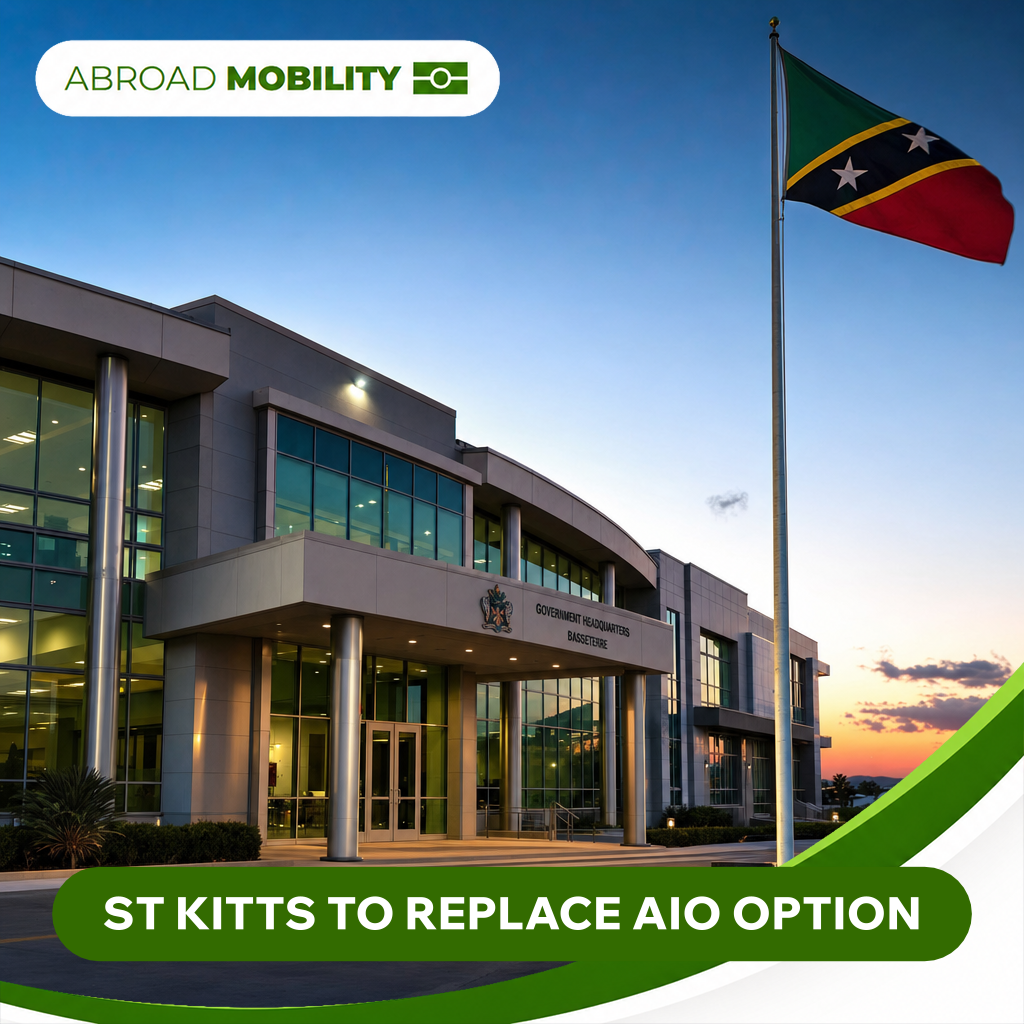

In June 2026 the Citizenship by Investment Unit (CIU) of St Kitts and Nevis announced that the Public Benefit Investment Option (PBO) will replace the Alternative Investment Option (AIO). The new route is defined around nationally beneficial projects designed to maximize local employment and skills transfer.
For Canadian immigration firms, wealth managers, and legal advisors who package Caribbean citizenship routes through co-managed infrastructure partners, this update reshapes how investor clients may structure qualifying contributions. The change also raises the bar for project scrutiny: documentation must now demonstrate verifiable public benefit and compliance with the CIU’s stated criteria.
Who This Fits
The PBO may fit HNW or UHNW clients of Canadian advisors seeking citizenship acquisition through infrastructure or development projects that show measurable social or economic impact. Firms already structuring files under the St Kitts and Nevis Citizenship by Investment (CBI) framework should revisit any AIO-linked pipeline cases to confirm ongoing eligibility or conversion to a PBO-approved project.
Eligibility and KYC/AML Checklist
All investor files continue to undergo standard eligibility and due-diligence scrutiny under the St Kitts and Nevis CBI policy. Advisors should ensure:
- Full source-of-funds documentation, including certified bank statements and transaction histories.
- Completion of KYC and AML screening through an authorized provider before submission.
- Clean criminal record and security clearance for the applicant and dependants.
- Verification of unencumbered investment capital.
- Third-party verification of project developer credentials if applicable.
For partners using Abroad Mobility’s Eligibility Engine, these requirements are embedded in the pre-submission workflow to ensure that documents and declarations align with the CIU’s expectations.
Investment Routes and Minimums
| Route | Structure and Objective | Indicative Investment and Fees |
|---|---|---|
| Public Benefit Investment Option (PBO) | Investment into government-approved projects demonstrating public benefit such as job creation, community infrastructure, or skills training. | Fees and minimums published by the CIU; exact figures are project-specific and subject to verification. |
| Alternative Investment Option (AIO, now phased out) | Former route allowing private development investment approved by the government; projects often real-estate based. | Legacy threshold applied before June 2026 as set by the CIU at time of subscription. |
| Real Estate Investment | Equity in an approved hotel or resort development, retaining property for the statutory holding period. | Thresholds maintained per official schedule; still active as of the June 2026 guidance. |
| Sustainable Island State Contribution (SISC) | Direct contribution to a state development fund supporting sustainability and climate resilience. | Fixed contribution per approved family unit size per CIU fee table. |
The listing follows official CIU references and is not exhaustive; all investment routes remain subject to updated regulations and due-diligence reviews.
Process and Timelines
The introduction of the PBO has not included any officially stated change to the core submission workflow: partner firms compile the client file, conduct pre-clearance due diligence, and submit through an authorized channel to the CIU. Processing timelines are expected to remain within the CIU’s standard CBI review cycle, subject to the complexity of project verification. Files in transition from AIO to PBO require confirmation by the CIU regarding treatment of any escrowed funds or previous approvals.
Program Risks and Change Notes (June 2026)
The June 2026 St Kitts and Nevis CIU announcement clarified the policy objective of the PBO but left ancillary regulations, including developer licensing and reporting duties, to forthcoming guidance. Advisors should assume additional disclosure requirements around project economics and employment projections. Projects marketed as offering public benefits will need verifiable metrics and potentially independent audits to remain listed as qualifying investments. The residual risk for advisors lies in early marketing or client onboarding before a project achieves final designation.
What Has Not Changed
- Applicants must complete the same CBI due-diligence process.
- All applications must use approved intermediaries, with payments made per option-specific instructions.
- Citizenship grants remain subject to Technical Committee approval and completion of vetting.
How Co-Managed Support Works
Through Abroad Mobility’s partnership framework, licensed Canadian immigration professionals access pre-vetted project data and compliance templates for the St Kitts and Nevis program. The platform manages case documentation, developer verification, and secure communication with local counsel, allowing partner firms to maintain client ownership while meeting cross-border compliance standards. Files are branded under the partner firm’s identity, with Abroad Mobility acting as back-office processor.
All CBI files must maintain a full audit trail of source-of-funds, investment verification, and government correspondence. Advisors are reminded that content herein is informational and does not constitute legal advice. Program details, fees, and policies are subject to change by the St Kitts and Nevis CIU.
The transition from the Alternative Investment Option to the Public Benefit Investment Option signals a policy shift toward transparent, developmental outcomes in St Kitts and Nevis. For Canadian advisors managing high-net-worth client interests, early alignment with the new compliance and documentation framework will minimize re-filing risk.
Firms seeking structured back-office support for these cases can explore Abroad Mobility’s co-managed partnership model here.
To discuss co-managed support or case handling, contact Abroad Mobility.


